Americans in Egypt
Directed by Johnny Vonneumann
The extraordinary experience we undergo while watching Americans in Egypt is essentially a reconstruction of the sensation a tourist has when visiting an ancient city — a blend of disorientation, exhaustion, and overcrowding. The filmmaker masterfully transforms the tourist’s point-of-view (POV) into the film’s primary formal structure. In doing so, the film’s form — that is, its cinematography and the subsequent editing of these images — maintains an intimate and profound connection with the work’s meaning and concept.
This is a brilliant example of the inseparable relationship between form and content. In Americans in Egypt, we clearly witness how the filmmaker, through the masterful use of his tools and a sharp focus on a central idea, opens the door to multiple interpretations. The film’s self-critical dimension, which reconstructs the sensory experience of a tourist on a journey, provides a genuine opportunity to reconsider the very nature of travel and the role of the traveler within it. The title Americans in Egypt perfectly complements this ironic and self-critical dimension.
Relying purely on images — supported by classical music — the film achieves a remarkable and praiseworthy success in conveying its intended concept.
Intruder
Directed by Donal Moloney
The brilliant documentary Intruder addresses a seemingly familiar subject, yet its distinctive perspective makes all the difference: urbex.
Filmmaker Donal Moloney, drawing upon interviews that occasionally transform into the narrator’s voice, a collection of striking photographs captured over years of exploration, and his own video footage shot inside abandoned locations, constructs a powerful narrative. At its core, the film highlights the most essential aspect of urbex: what exactly is the observer seeking in these derelict spaces? Merely a stunning photograph, or something deeper — the stories of the people who once lived there?
A standout quality of this short documentary is its exploration of the many dimensions of urbex, while paying close attention to the narrator’s personal facets, including the contrast between his day job and his artistic concerns. Consequently, the narrator himself, through his eloquent narration, becomes the central character. The film thus embodies the classic hero’s journey found in narrative cinema, albeit in a documentary form grounded in reality.
The film’s rhythm, its overall tone, the intelligent use of sound design, and the subtle shifts in mood all demonstrate that every element has been crafted with precision and remarkable sensitivity.


Water City
Directed by Yuan Qin
Water City is a short animation that takes notable steps in the realm of experimental cinema through a clever central idea: the use of split-screen. As we see, form and content are in complete harmony here. The split-screen is not merely a visual device; rather, it serves to highlight the contrasts between two situations, their similarities, and ultimately the broad sensory and conceptual scope of the subject.
The war that occurs in the middle of the film, effectively linking the two narrative worlds, serves as the central pivot of this animation. It is a work that intelligently moves between different eras and various locations, ultimately capturing a spirit that flows through centuries — one that passes through destruction, war, and rebirth.
It should be noted, however, that the narrative of this animation is complex, and it is likely that viewers will not grasp all of its semantic and narrative layers on the first viewing.
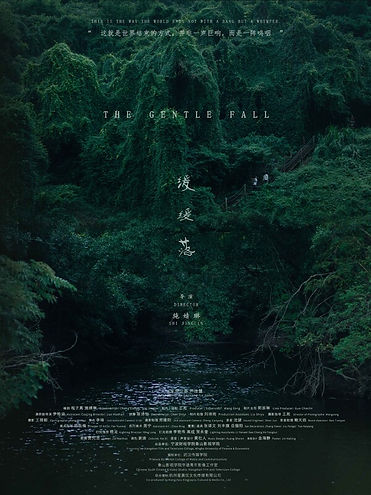
The Gentle Fall
Directed by Jinglin Shi
Jinglin Shi has successfully created a distinctive cinematic language of her own in her short film The Gentle Fall. The film builds its world around its two central characters — a young girl and her grandmother — through small, everyday moments of rural life.
The subject of the film is perfectly aligned with the director’s stylistic choices. Through her decisions, the filmmaker strives to reconstruct the very simplicity, purity, and freedom of nature within the work itself: static and relatively long shots, extended silences, placing characters within the heart of nature, the use of ambient sound, straightforward editing, and a fluid narrative that moves seamlessly between different time periods.
The film’s central theme, which connects in some way to a government notice restricting unlicensed healers, revolves around the dilemma of staying in nature or leaving it. The young girl must decide whether she wants to spend the rest of her life beside her grandmother in the village or move to the city to live with her parents — parents who are said to be very busy and deeply engaged in urban life.
The film’s poetic and ambiguous ending effectively serves as an image of the young girl’s future — a reflection of the choice she has made to embrace village life. The film executes this concept masterfully, preserving its complexities while avoiding the trap of conventional or clichéd comparisons.